
Realizacja
Fully Automated Wiper Assembly Line
Challenge
The project was initiated to introduce a new wiper mechanism model into production while simultaneously increasing the volume of existing products. The client faced the challenge of improving efficiency, reducing cycle time, and optimizing the assembly process. Until then, the process relied on manual operator work. The existing manual assembly line proved insufficient — workstations were often idle, and two operators alternated on tasks, leading to wasted time and resources.
The goal of implementing the robotic workstation was also to showcase the plant’s modern production capabilities to the OEM end customer.
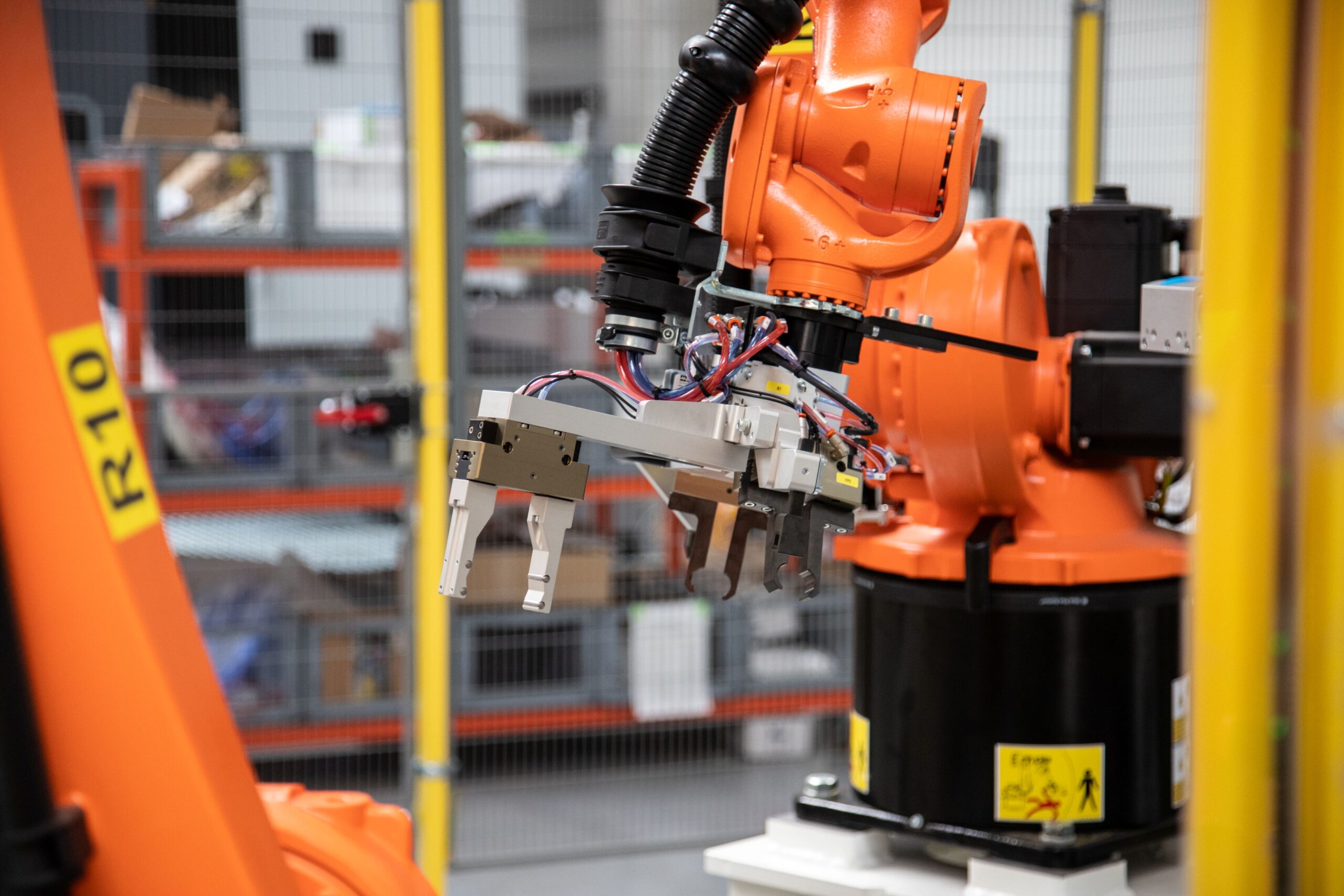
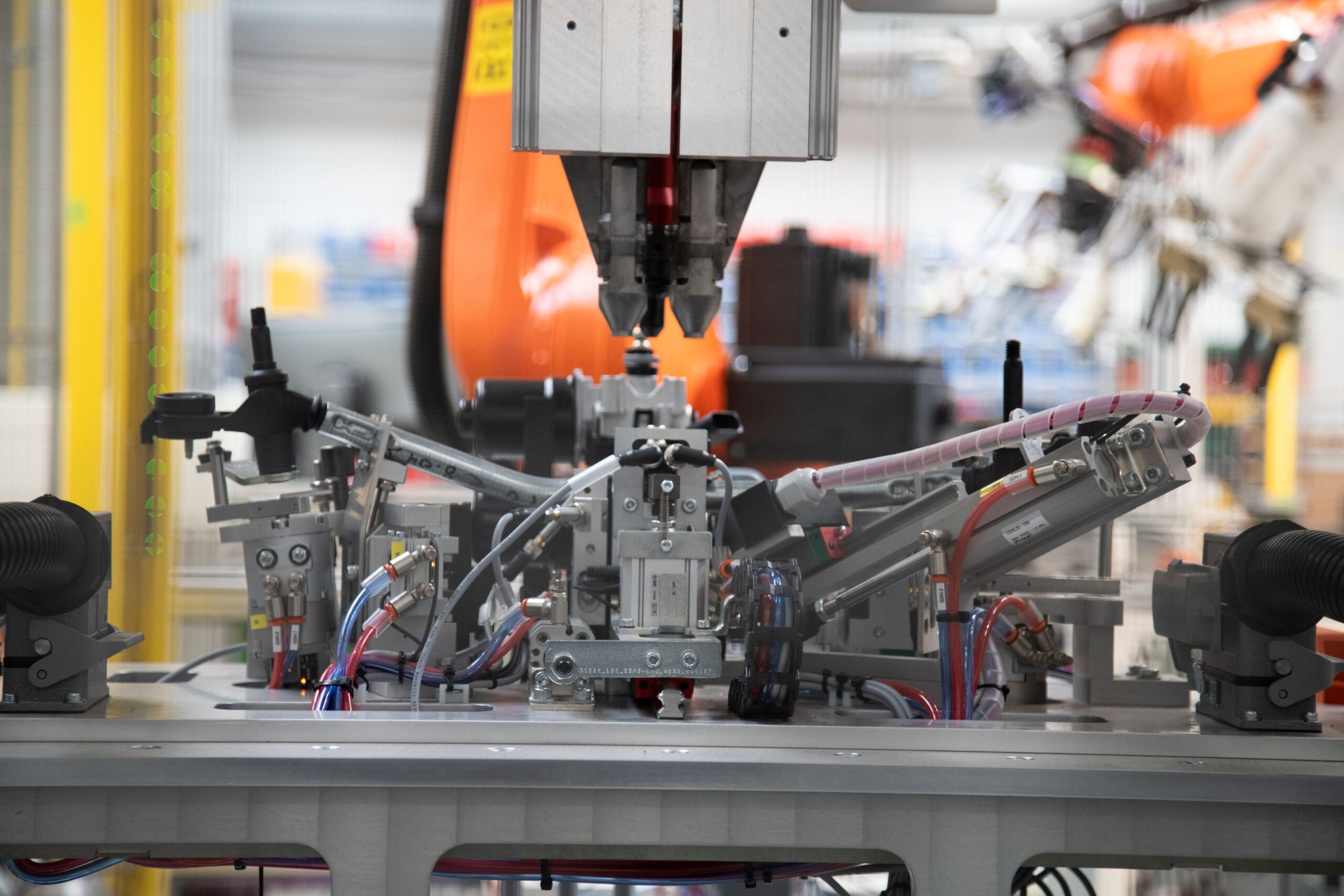
Technologies and Solutions
Process and Execution
The project began with an in-depth analysis of the existing manual process. Our engineering team conducted optimization workshops and created a digital simulation of the entire process, considering every stage: operation sequence, robot layout, cycle times, and tooling requirements.
Based on the collected data, the equipment was designed and manufactured. Before final implementation, the entire line was tested in our assembly hall. After a successful trial run, the line was installed at the client’s site and finalized with operator training. The project also included after-sales service and technical support.
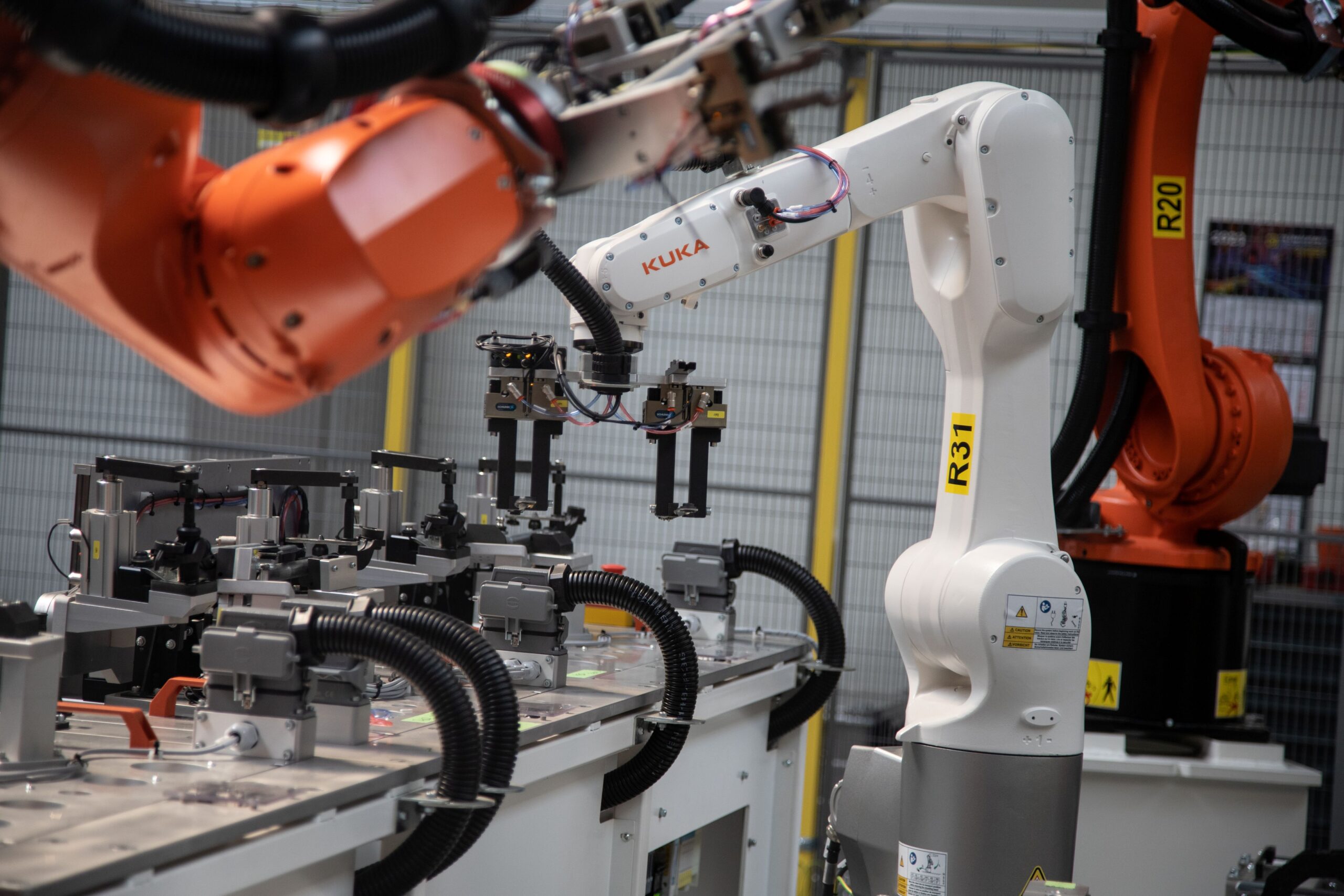
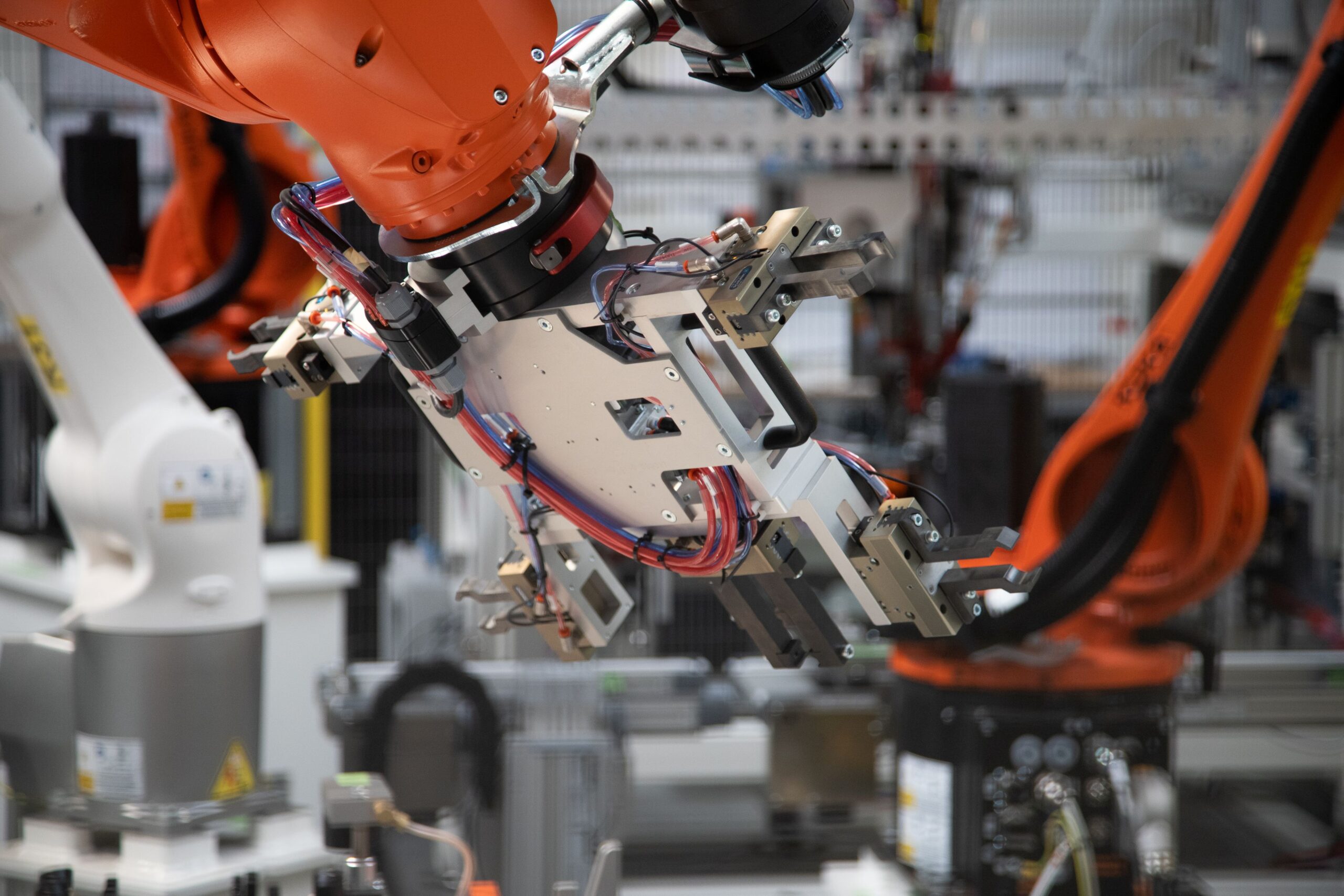
Results
Cycle time reduced to < 30 seconds per unit
Increased efficiency and throughput of the entire process
Reduction of workstations from four to one without compromising quality
High stability and repeatability of assembly
Quick changeovers between different product models
Finished products leave the line fully labeled and packaged